How to Balance Goals Across Career, Family, and Health Without Burning Out
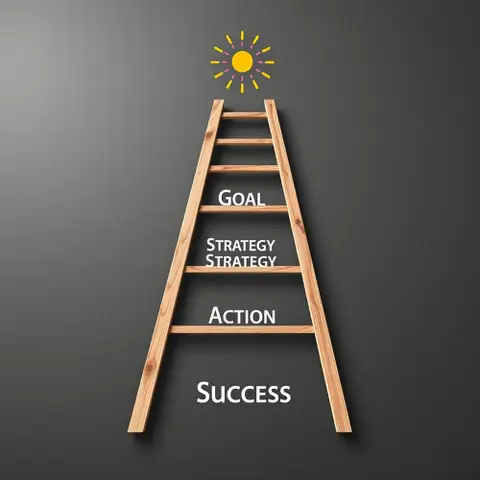
Balancing multiple life ambitions without sacrificing your health, relationships, or sanity requires a strategic approach to multi-category goal setting. By understanding how to balance goals across life areas, structure, rank, and allocate resources across career, family, and personal well-being, you can achieve holistic success without experiencing chronic burnout.
Key Takeaways
- Goals must span multiple life categories—including family, career, health, social, educational, and financial—to foster true holistic development.
- When you allocate resources and rank goals by your personal values, you prevent burnout by ensuring you spend time where it matters most.
- Financial and lifestyle goals must remain realistic and aligned with your current standing to avoid chronic stress and contradiction.
- Daily reviews, subconscious programming through writing, and constant visualization help maintain momentum across all competing priorities.
- Guarding your time against distractions is easier when you evaluate every choice against a simple litmus test: does the decision move me closer to my goals?
The Myth of the One-Dimensional Achiever
We only have one life given to us, and the painful truth is that you cannot become a doctor, a top-tier engineer, a corporate CEO, a legal expert, and a finance magnate all at the same time. Trying to conquer every professional vertical simultaneously is the fastest path to mental exhaustion.
Many high-achievers make the mistake of investing all their creative and physical energy in their careers while completely neglecting their physical health, family relationships, and personal growth.
True success isn't measured solely by a title on a business card or the balance in a bank account. Holistic development requires a deliberate framework that spreads your ambitions across six vital pillars: family, career, health, social connections, education, and finances.
When you distribute your focus across these distinct domains, you build a resilient life structure that protects you from total collapse if one area experiences a temporary setback.
Mapping Out Your Core Life Pillars
To begin balancing your ambitions, write down your grand, large-scale aspirations for each of the six major areas. Do not censor yourself yet; aim high and capture what you genuinely want out of life. However, keep a reality check on your radar. Your objectives must remain consistent with your underlying principles, aptitudes, and financial realities.
For instance, if your annual income sits at fifty thousand dollars, aiming to instantly purchase a million-dollar home creates an immediate systemic contradiction that will breed frustration rather than motivation.
Ranking and Resource Allocation Based on Values
Once you document your master list of goals across all life categories, the next critical phase is to rank them. Not every goal is equally important, and your life will feel chaotic if you treat a minor hobby with the same urgency as your children's upbringing or your chronic health management.
Your ranking should be deeply personal. Factors such as your core values, cultural upbringing, personal philosophy, and current life stage dictate whether family outweighs career or vice versa. There is no universally "correct" hierarchy. The secret to avoiding burnout lies entirely in aligning your time and energy distribution with your chosen ranking.
When you allocate your hours based on a conscious hierarchy, you stop feeling guilty about setting boundaries. If family sits at the top of your values list, you will naturally structure your work hours to protect your evenings, ensuring your daily routine reflects your actual priorities instead of bowing to external expectations.
The Power of Daily Routines and Subconscious Alignment
Setting balanced goals on paper is only the preliminary step. The real change occurs when you integrate those goals into your daily operating cadence. If you tuck your goal list away in a physical notebook and never look at it again, your daily habits will inevitably default to comfort and distraction.
Practical Methods for Constant Exposure
To keep your subconscious mind actively working on your behalf, immerse yourself in your goals daily:
- Write your goals down by hand and pin that list in a prominent, unmissable place on your wall.
- Save a digital copy of your goal document on your desktop or laptop, where you see it every morning.
- Add your prioritized goals as a dedicated note on your cell phone so you can review them during transitions throughout the day.
- Visualize the outcomes. Spend a few moments seeing yourself enjoying the balanced benefits of your efforts—healthy relationships, thriving career milestones, and stable finances.
When your subconscious mind receives these clear, positive instructions day after day, it begins to scan your environment actively for opportunities and solutions that align with your targets, smoothing out the friction of daily decision-making.
Resisting Temptation With a Simple Litmus Test
The greatest threat to a balanced life isn't a lack of talent; it is the constant influx of distractions and shiny objects that derail your progress. Every single day, commitments, optional projects, and leisure traps bombard you and pull you away from your master plan.
Protecting your balanced lifestyle requires ruthlessly guarding your time. Whenever a new request or temptation pops up, run it through a single, uncompromising question: "Will this action take me closer to my goals?" If the answer is an unequivocal yes, move forward without hesitation. If the answer is no—or even a hesitant maybe—you now have the clarity required to say no and protect your energy for what truly matters.
Conclusion
Balancing your career, family, health, and personal growth is an ongoing practice of intentional design, honest self-assessment, and ruthless prioritization. By breaking grand visions down into manageable daily steps and aligning your calendar with your core values, you can achieve remarkable things without sacrificing your well-being.
To dive deeper into the mechanics of building a purposeful roadmap for your future, make sure to Listen to the full episode of the Achievement Radio Podcast and start unlocking your true potential today!
Frequently Asked Questions
How many life categories should I set goals for at once?
It is generally recommended to focus on six core areas: family, career, health, social life, education, and finances. Tracking these concurrently ensures you maintain balance and avoid neglecting critical parts of your life while over-indexing on just one, like your career.
What happens when professional goals contradict financial goals?
Contradictions arise when goals lack alignment with your current realities, such as aiming to purchase an expensive home that far exceeds your verified income. To resolve the issue, audit your objectives to ensure they scale logically with your current resources and step-by-step milestones.
How do I prioritize competing goals when everything feels important?
Prioritization should be driven strictly by your personal values, upbringing, and core principles. If your family takes precedence over your career in your personal hierarchy, your scheduling and resource allocation must reflect that exact weight, regardless of external pressures.
Can daily goal reviews really prevent burnout?
Yes. Reviewing your goals daily and weekly keeps your subconscious mind focused on what matters, allowing you to filter out distractions and say 'no' to commitments that drain your energy without advancing your true priorities.

How to Overcome Limiting Beliefs Using Cognitive Reframing